
A home rarely reveals its weakest points all at once.
Long before a ceiling stain catches your attention or mold becomes visible on a wall, moisture may already be working quietly behind the scenes. It moves through small openings, settles into building materials, and gradually affects areas homeowners rarely think about during their daily routine.
That silent progression is what makes moisture one of the most misunderstood issues in residential properties. By the time obvious warning signs appear, the conditions that allowed the problem to develop may have existed for weeks—or even months.
The encouraging news is that hidden moisture doesn’t have to become an expensive surprise. Understanding how it develops, where it typically starts, and which early signs deserve attention allows homeowners to take practical steps before minor issues become major restoration projects.
This guide explains how moisture behaves inside a home, why it deserves attention even when everything appears normal, and how early action can help protect both your property and your peace of mind.
Why moisture is one of the most overlooked problems in a home
Not every home problem announces itself with a dramatic leak or visible damage.
Moisture usually develops much more quietly. A slow plumbing drip, a worn window seal, condensation from an HVAC system, or a small roof vulnerability can introduce water into a structure without creating an immediate reason for concern.
Because nothing appears out of place, it’s easy to assume everything is functioning as it should.
Meanwhile, building materials begin responding to that excess moisture. Wood absorbs water, drywall slowly weakens, insulation becomes less effective, and enclosed spaces remain damp longer than they were designed to.
A homeowner might first notice something as subtle as a faint musty smell after several rainy days. Since there are no obvious stains or puddles, that change may seem insignificant. In reality, it could be the first indication that moisture has been collecting inside a wall or beneath flooring where it cannot yet be seen.
Situations like this illustrate why routine awareness matters. Detecting moisture early often means solving a relatively small issue before it affects larger portions of the home.

Where hidden moisture usually begins
Hidden moisture rarely has a single cause.
Instead, it often begins in areas that experience repeated exposure to water or changes in temperature and humidity. Kitchens, bathrooms, laundry rooms, attics, crawl spaces, basements, and areas surrounding HVAC equipment are among the most common places where moisture can gradually accumulate.
Even small plumbing connections deserve attention.
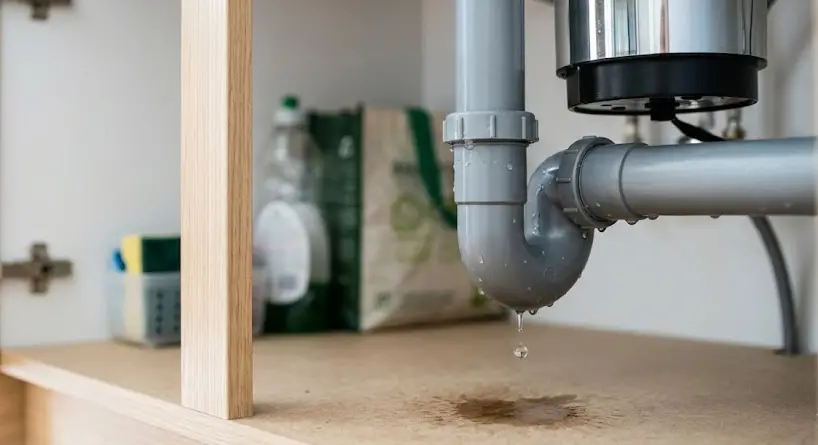
Imagine a supply line beneath a kitchen sink that releases only a few drops of water each day. The leak may never create standing water or attract immediate attention, yet over time that constant moisture can affect nearby cabinetry, drywall, and flooring.
Window frames provide another example. Aging seals may allow moisture to enter during heavy rain, while everyday condensation can repeatedly dampen surrounding materials if ventilation is limited.
Seasonal weather also plays an important role. Periods of high humidity or extended rainfall can increase indoor moisture levels, particularly in homes where ventilation or drainage systems are no longer performing efficiently.
Understanding where moisture commonly begins doesn’t mean homeowners should worry about every small change they notice. Instead, it helps them recognize patterns and respond thoughtfully when something seems different from normal.
How moisture gradually affects your home’s structure
Moisture doesn’t have to cause a flood to compromise a home’s condition. In many cases, the damage develops so gradually that homeowners don’t notice anything unusual until building materials begin reacting to months of repeated exposure.
Wood is particularly sensitive to moisture fluctuations. As it absorbs and releases water over time, it naturally expands and contracts. Eventually, floors may begin to squeak, trim can separate from walls, or doors that once closed smoothly may start sticking.
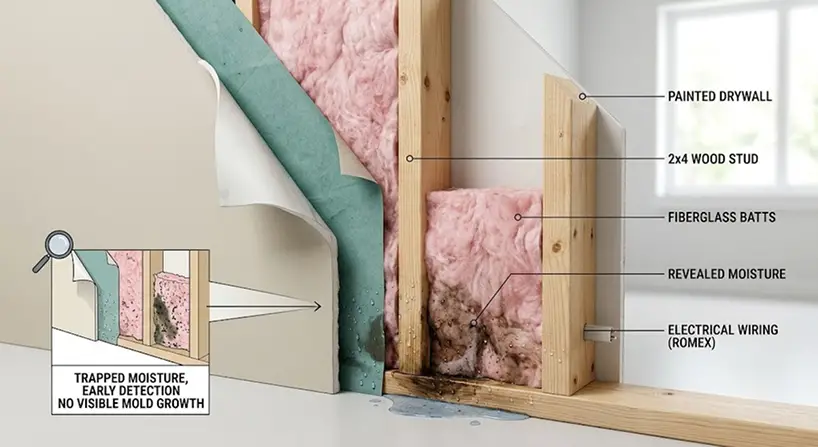
Drywall tells a similar story. At first glance, painted walls may appear perfectly normal, even while moisture is slowly weakening the material behind the surface. As time passes, bubbling paint, soft spots, or slight discoloration may begin to appear.
Insulation is another material that’s often overlooked. Once it becomes damp, it loses much of its ability to regulate indoor temperatures efficiently. That means hidden moisture can affect not only the structure of a home but also its overall comfort and energy performance.
Imagine walking across a hardwood floor and noticing a slight change beneath your feet. The difference feels minor—easy to ignore. Several months later, that same area has noticeably warped, and the investigation reveals moisture that had been slowly accumulating below the flooring all along.
Situations like this highlight why identifying moisture early is often far less disruptive than repairing the damage left behind.
Why mold is often the last visible warning sign
Many homeowners assume mold is the problem.
In reality, mold is often evidence that moisture has already been present for an extended period.
Building materials need consistent moisture before mold can begin to develop. By the time discoloration becomes visible or that familiar musty odor appears, hidden moisture may already have affected surrounding materials that cannot be seen without a closer inspection.
This distinction is important because removing visible mold alone rarely addresses the source of the problem.
Consider a homeowner who cleans a small area of discoloration on a bathroom wall. Everything appears normal again for a few weeks, only for the stain to return later. The recurring issue isn’t necessarily the surface itself—it’s the moisture continuing to feed the conditions behind it.
Understanding that mold is usually a symptom rather than the starting point helps homeowners focus on identifying and correcting the underlying moisture source first.
That’s where a professional inspection can provide valuable clarity.
Signs homeowners should never ignore
Homes often provide subtle clues when moisture begins affecting building materials.
These signs don’t automatically indicate major structural damage, but they do deserve attention before conditions have the opportunity to worsen.
Some of the most common indicators include:
- A persistent musty odor that doesn’t disappear with routine cleaning.
- Paint that begins bubbling, cracking, or peeling unexpectedly.
- Water stains that slowly become darker or larger over time.
- Soft drywall or walls that no longer feel solid.
- Floors that begin to warp, cup, or feel uneven.
- Condensation appearing repeatedly on interior windows.
- Cabinets swelling around sinks or plumbing fixtures.
- Areas that remain damp noticeably longer than surrounding surfaces.
Each of these signs represents an opportunity to investigate early rather than react later.
Responding while changes are still relatively minor often leads to simpler and more cost-effective solutions.

When professional guidance becomes the right next step
Not every moisture concern requires extensive restoration work.
Sometimes improving ventilation, replacing a worn seal, or repairing a small plumbing leak is enough to resolve the issue before additional damage occurs.
Other situations call for a closer evaluation.
If unusual odors persist, water stains continue growing, flooring begins changing shape, or moisture repeatedly returns despite previous repairs, identifying the source becomes far more important than simply treating the visible symptoms.
Professional moisture inspections rely on specialized equipment capable of locating hidden moisture inside walls, ceilings, and flooring without unnecessary demolition.
At Guardian Solutions Construction, every inspection begins with understanding why moisture is present—not simply documenting where damage can be seen. Identifying the source allows homeowners to make informed decisions based on accurate information instead of assumptions.
That educational approach helps homeowners understand their property while avoiding unnecessary repairs whenever possible.
Protecting your home starts long before repairs are needed
The most effective way to reduce restoration costs is to prevent hidden moisture from becoming a larger issue in the first place.
Routine maintenance doesn’t need to be complicated. Periodically checking plumbing connections, inspecting attic spaces after heavy rain, monitoring window seals, cleaning gutters, and paying attention to subtle changes inside the home can make a meaningful difference over time.
Just as importantly, homeowners shouldn’t feel pressured to wait until visible damage appears before asking questions.
Preventive inspections provide peace of mind by identifying conditions that may otherwise remain hidden.
Guardian Solutions Construction encourages homeowners to view moisture awareness as part of responsible homeownership. Addressing small concerns early helps preserve a property’s structure, comfort, and long-term value while reducing the likelihood of more significant restoration work in the future.
Protecting your home begins with understanding what you can’t see
The most significant moisture problems rarely begin with dramatic warning signs.
More often, they develop quietly behind walls, beneath flooring, or inside spaces homeowners seldom inspect. Recognizing those hidden risks doesn’t mean expecting the worst—it means understanding that early awareness often leads to simpler solutions.
A small plumbing drip, minor condensation, or a barely noticeable odor may seem insignificant on its own. Yet each can provide valuable information about how a home is performing over time.
By combining regular maintenance with timely professional inspections when needed, homeowners place themselves in a much stronger position to protect both their investment and the people who live inside it.
At Guardian Solutions Construction, the goal extends beyond restoring damaged properties. It begins with helping homeowners understand how moisture behaves, why early detection matters, and how informed decisions today can help preserve a healthier, safer home for years to come.