
If you’re starting to plan a kitchen remodel, you’ve probably noticed the design advice online contradicts itself from one article to the next. That’s partly because kitchen trends genuinely are shifting this year — but not in the direction most people expect. The overall theme for 2026 isn’t a specific color or material. It’s a move away from remodeling purely for looks and toward remodeling for how the space actually gets used.
That shift matters more than any single design choice, because it changes how you should prioritize your budget. Here’s what’s actually worth paying attention to.
Function is driving more decisions than style
For years, kitchen remodels were largely about aesthetics — swapping cabinets, changing countertops, chasing whatever color was trending. That’s changing. Houzz’s 2026 Kitchen Trends Study, based on a survey of more than 1,700 homeowners, found that renovations are now shaped more by function, personalization, and smarter storage than by style alone. Forbes
Part of the reason is practical. With older housing stock, fewer homes available to buy, and people staying in their homes longer, more owners are investing in making their current kitchen work better rather than moving to a new one. If you’ve been putting off a remodel because your kitchen “still looks fine,” this is the trend that should change your thinking — the return isn’t just visual, it’s in how much easier the space is to actually live in. Forbes
What this looks like in practice: better traffic flow between the sink, stove, and refrigerator, storage that matches how you actually cook (not just how a kitchen “should” look on a listing photo), and layouts that support more than one person working in the kitchen at once.
Built-in storage is no longer a luxury add-on
More than three-quarters of homeowners are now incorporating built-in features into their kitchen renovation, with pantry cabinets the most popular choice at 47%, followed by beverage stations at 24%. Built-in seating and wine storage are also showing up more often, and butler’s pantries — once reserved for larger, high-end homes — are appearing in a growing share of standard renovations.
This is one of the more cost-effective trends on this list, honestly. A well-planned pantry or appliance garage does more for daily usability than a lot of higher-ticket finish upgrades, and it’s the kind of feature that tends to matter to future buyers too.

Warmer palettes are replacing the all-white kitchen
According to NKBA’s survey of 634 industry professionals, 96% of designers are still using neutral tones — but they’ve shifted away from cool, stark whites toward warmer beige, mushroom, and taupe shades. Actual color is also making a comeback, with green now used by 86% of designers and blue by 78%. aol
At the same time, the all-white kitchen and modern farmhouse look that dominated the last several years are losing their appeal, with homeowners favoring warmer finishes and more textured, timeless materials instead. If your current kitchen leans heavily cool and stark, this is a low-risk update — even swapping hardware finishes or a backsplash tone can shift the feel without a full renovation.
Two-tone cabinets and bigger islands
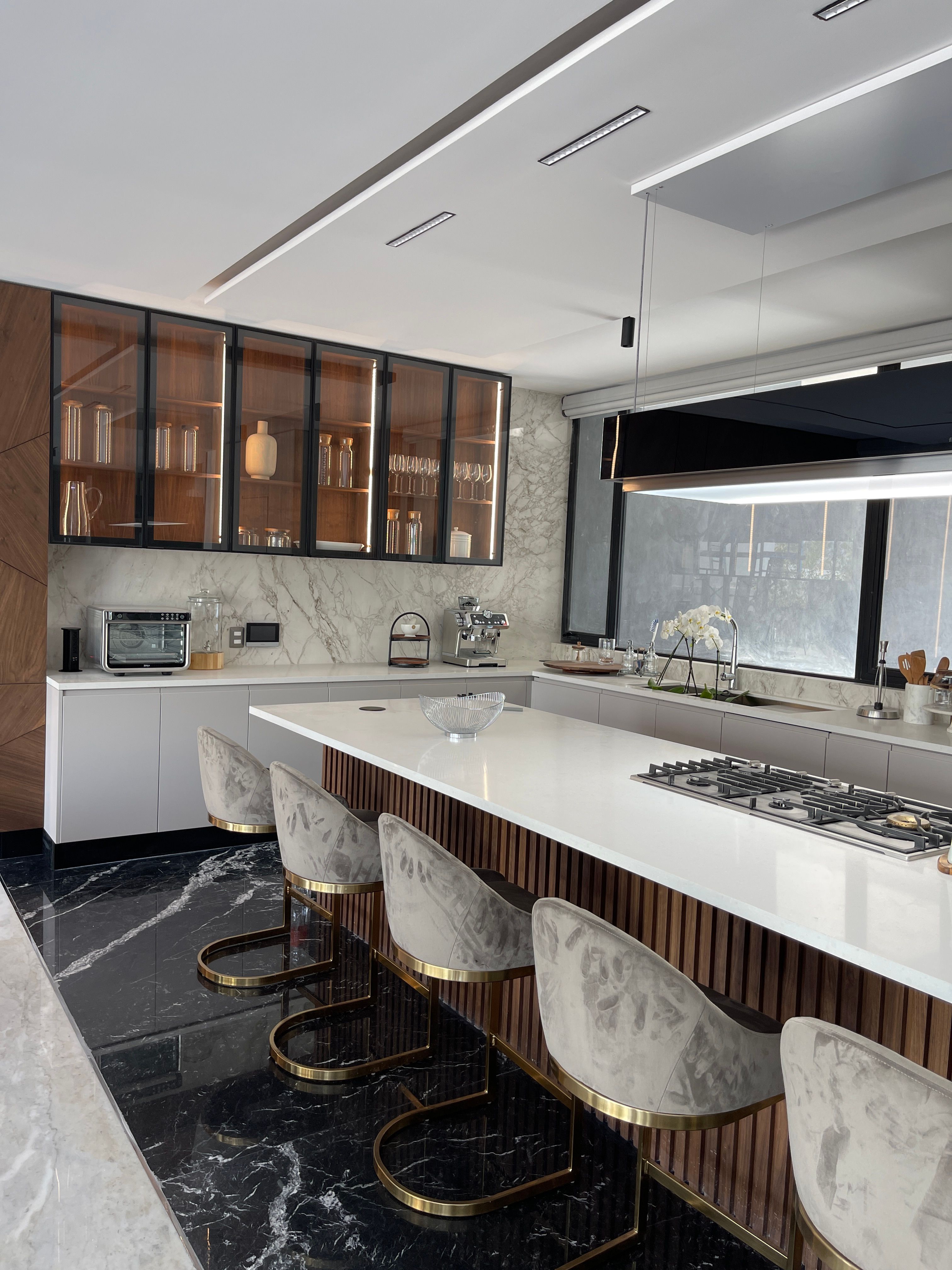
Two-tone cabinetry — one shade on the upper cabinets, a different one on the lower — is becoming more common, and kitchen islands are getting noticeably larger, with about half of renovated islands now exceeding seven feet in length, most often in a rectangular shape.
This is where it’s worth pausing before committing, because island size in particular is a layout decision, not just a design one. A bigger island only works well if your kitchen’s footprint can actually support the clearance around it. This is a case where getting a contractor’s read on your space before finalizing the design saves you from a costly correction later.
Backsplashes are keeping it simple
Tile is still the default choice for backsplashes this year, and most homeowners are sticking with white or off-white rather than bold patterns. Rectangular tile remains the most common shape, while more decorative styles stay in niche territory. At the same time, slab backsplashes — especially in engineered quartz — are gaining ground as an alternative to tile grout lines and upkeep.
If low maintenance matters more to you than a statement look, a slab backsplash is worth pricing out alongside tile. It costs more upfront in most cases, but it holds up better over time and simplifies cleaning, which matters if the kitchen sees heavy daily use.
Smart technology is becoming more integrated, not more visible
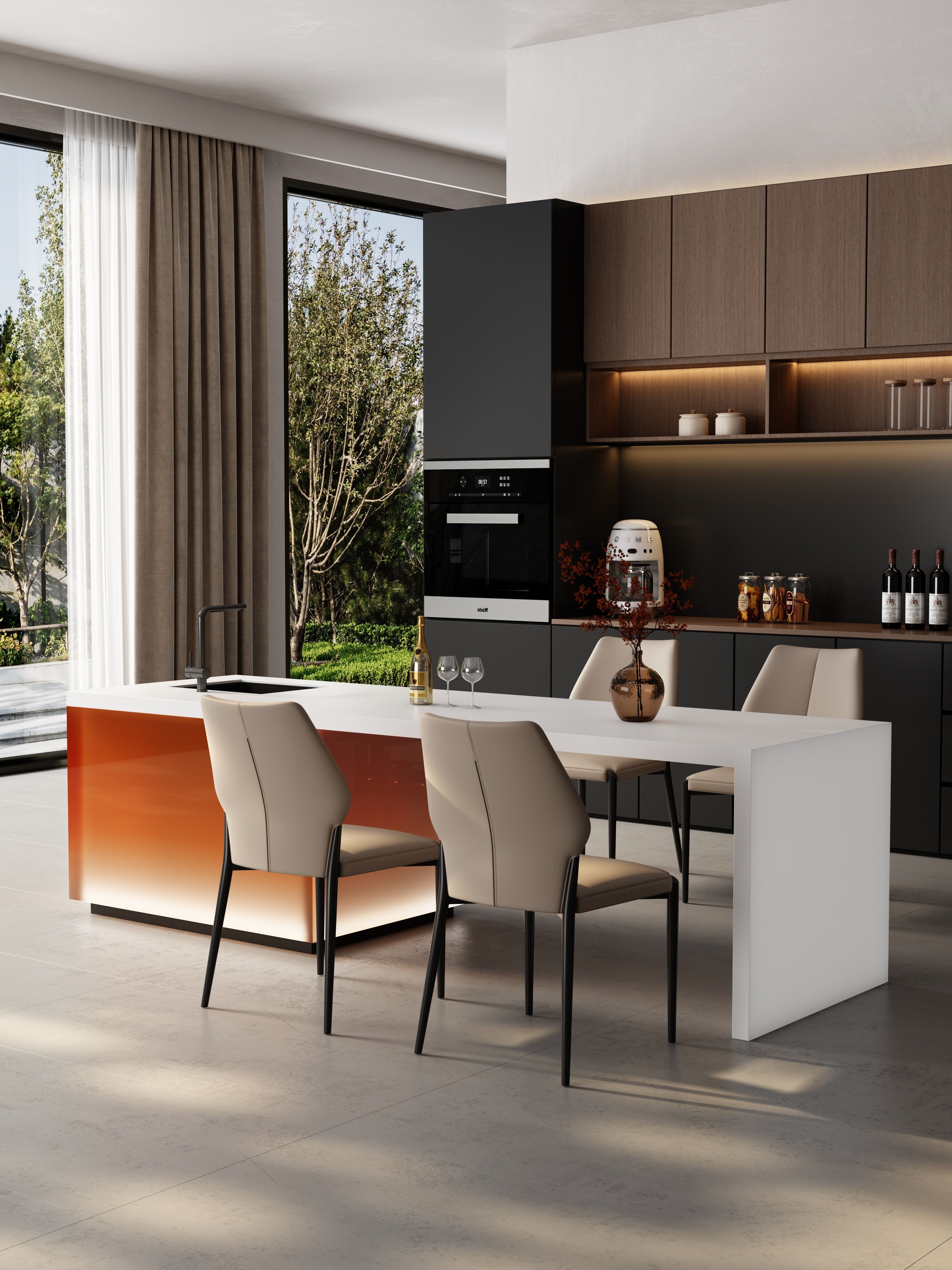
Smart kitchen features aren’t new, but the way they’re being used has changed. Instead of individual gadgets, more homeowners are asking for appliances and systems that work together — refrigerators with usage alerts, ovens with remote monitoring, lighting and ventilation controlled from one hub. The goal isn’t a “smart kitchen” as a selling point. It’s a kitchen that’s easier to run day to day.
This is one of the trends where planning ahead matters more than the finish itself. Wiring, outlet placement, and hub locations are far easier to handle during a remodel than to retrofit afterward, so it’s worth deciding early which features you actually want rather than adding them as an afterthought once the walls are closed up.

What’s genuinely fading out
A few trends that dominated the last several years are losing ground: open shelving, modern farmhouse styling, and all-matte hardware finishes. They photograph well but tend to fall short on daily practicality — open shelving shows dust and clutter, and all-matte finishes show fingerprints and wear faster than most homeowners expect once they’re living with them.
If your current kitchen has any of these, it doesn’t mean a full overhaul is necessary. Swapping hardware or adding upper cabinet doors is often enough to modernize the space without a ground-up renovation.
What to prioritize if your budget is limited
Not every trend deserves equal investment. If you’re weighing where to spend:
- Built-in storage tends to offer the best return relative to cost — a pantry or appliance garage improves daily function more than most finish upgrades.
- Warmer neutrals are a low-cost way to update the feel of a kitchen, especially through paint, hardware, or a backsplash refresh.
- Island resizing and smart tech wiring are the ones to plan carefully upfront, since they’re expensive to redo once the work is finished.
Every kitchen is a different shape, budget, and set of daily habits, so the right combination of these trends really depends on the space you’re starting with. A quick walkthrough with someone who’s done this before usually surfaces layout issues — clearance, plumbing, wiring — that aren’t obvious from a design photo.