

A cracked tile. A stubborn door. Water stains that keep coming back no matter how many times you paint over them. At some point, almost every homeowner runs into a problem and asks the same question: is this something I fix, or something bigger?
The honest answer is that it depends less on how the problem looks and more on what’s actually causing it. A lot of homeowners either overspend on a full renovation for something a simple repair would have solved, or underspend on repeated patch jobs for a problem that keeps coming back because the real cause was never addressed. Knowing the difference upfront saves both money and frustration.
Start by asking what the problem is actually telling you
Most home issues fall into one of two categories: isolated and cosmetic, or recurring and systemic. A single water stain on a ceiling after one bad storm is usually isolated. The same stain reappearing every few months, even after patching, is systemic — something upstream is still causing it, whether that’s a roofing issue, flashing problem, or plumbing leak.
The pattern matters more than the symptom. A crack in drywall by itself doesn’t tell you much. A crack that reopens every summer, in the same spot, after you’ve patched it twice, tells you the underlying cause hasn’t been addressed.
What usually counts as a repair
Repairs are targeted fixes for a specific, contained issue. They don’t usually require rethinking the space, just correcting what’s broken. Common examples include:
- A single cracked tile or section of flooring
- A leaky faucet or running toilet
- A patch of peeling paint from a one-time moisture event
- A door or window that’s misaligned but otherwise functional
- Minor drywall damage from an isolated incident
If the issue is contained, hasn’t recurred, and doesn’t point to a larger system problem, a repair is usually the right call. Trying to justify a full renovation for something this isolated tends to be an overcorrection.
What usually points toward a renovation
Renovation becomes the more sensible option when a problem is recurring, systemic, or tied to the layout or function of the space itself rather than a single component. Signs this is where you’re headed include:
- The same issue keeps returning after repeated repairs
- Multiple related problems are showing up in the same area at once
- Outdated electrical, plumbing, or HVAC systems are driving the damage
- The layout itself no longer works for how the household actually uses the space
A kitchen where the cabinets are falling apart, the layout is cramped, and the wiring is decades old isn’t a repair project. Fixing one of those things without addressing the others usually means doing the work again within a few years.
Where restoration fits in between the two
There’s a middle ground a lot of homeowners don’t realize exists: restoration work. This covers situations that are bigger than a simple patch but don’t require redesigning the space or gutting it entirely.
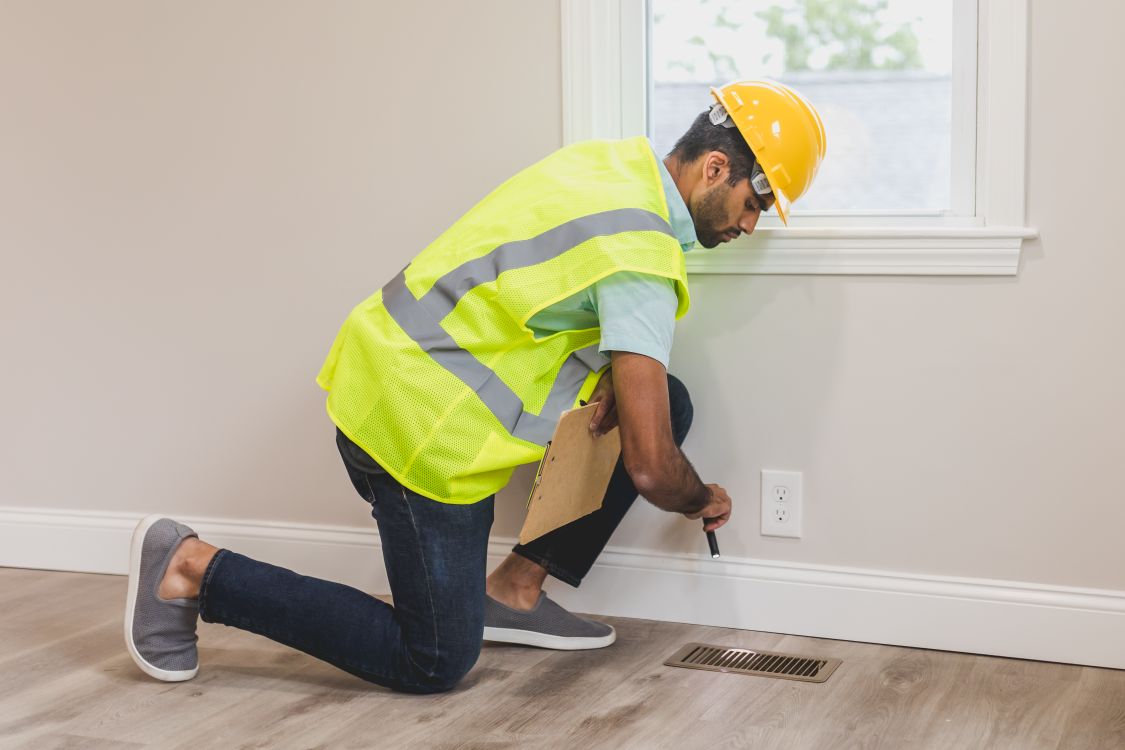
Think of water-damaged drywall after a roof leak, trim that’s warped from years of humidity, or flooring that’s cupped after a slow, unnoticed leak. These aren’t cosmetic fixes, but they also don’t require reworking the entire room’s layout or systems. Restoration means addressing the damage thoroughly and matching the repair to the rest of the space, so it doesn’t look or feel like a patch job once it’s done.
This is often the category homeowners miss entirely. They either call it a repair and end up with a mismatched patch that stands out, or they assume it means a full renovation and spend far more than the situation calls for.
A simple way to sort your situation
If you’re standing in front of a problem right now trying to decide, these questions tend to clarify things quickly:
- Has this happened before, in the same spot? If yes, a repair alone likely won’t hold.
- Is the damage isolated to one component, or does it affect the surrounding structure or finish? Isolated points to repair. Spreading points to restoration or renovation.
- Is the underlying system (plumbing, electrical, roofing) involved, or just the surface? Systems involved usually means more than a repair.
- Does the space still function the way your household needs it to? If the layout itself is the problem, that’s renovation territory, not repair.
None of these questions require guesswork if you’re not sure. A short inspection from a contractor who does both repair and restoration work can usually answer all four in one visit, without pushing you toward a bigger project than you actually need.

Getting it right saves money in both directions
The real cost of misjudging this isn’t just wasted money on an unnecessary renovation. It’s also the slower cost of repeated repairs on a problem that was never going to be solved by patching alone. A water stain patched three times over two years usually ends up costing more than addressing the leak and the damage properly the first time.
Whether the answer is a straightforward repair, a restoration project, or a full renovation, the goal is the same: match the fix to what the home is actually telling you, not to how the damage looks on the surface.